DVT Treatment in Lucknow - Venous Disorders Specialist
Advanced Minimally Invasive Vein Care By Dr. Vrishit Saraswat
Deep Vein Thrombosis (DVT) and other venous disorders pose serious risks to vascular health by disrupting blood flow in the veins, particularly in the legs. These conditions can lead to symptoms such as pain, swelling, skin changes, and non-healing ulcers, with the potential for life-threatening complications if not addressed. Fortunately, modern minimally invasive treatments are available to restore circulation, alleviate symptoms, and prevent complications, offering faster recovery times and enhanced patient comfort.

What Is Deep Vein Thrombosis (DVT)?
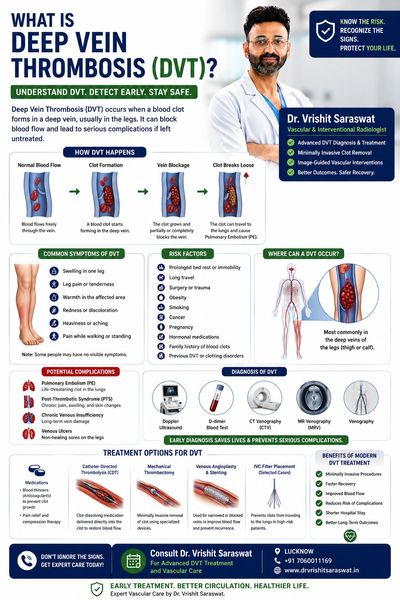
Deep Vein Thrombosis (DVT) occurs when a blood clot forms in the deep veins, most commonly in the legs. This clot can partially or completely block blood flow, leading to symptoms like swelling and pain. DVT is a medical emergency, as the clot has the potential to travel to the lungs and result in Pulmonary Embolism (PE), a condition that can be life-threatening.
Common Symptoms of Deep Vein Thrombosis include:
- Leg swelling
- Leg pain or heaviness
- Warmth in the affected leg
- Redness or skin discoloration
- Tenderness in the calf
- Sudden swelling in one leg
- Difficulty walking
Interestingly, some patients may exhibit minimal symptoms despite serious clot formation, underscoring the importance of monitoring for venous disorders. If you or someone you know is affected by DVT, exploring minimally invasive treatments may be a beneficial option.
Benefits of Minimally Invasive Venous Treatment
Minimally Invasive Procedures
No large surgical cuts are required.
Faster Recovery
Patients usually recover quickly and resume normal activities earlier.
Reduced Pain & Complications
Minimally invasive procedures often involve less pain and lower complication rates.
Improved Blood Flow
Treatment restores venous circulation and relieves symptoms.
Short Hospital Stay
Many procedures are performed as daycare or short-stay admissions.
