Peripheral Artery Disease (PAD) Treatment in Lucknow
Advanced Minimally Invasive Vascular Care By Dr. Vrishit Saraswat
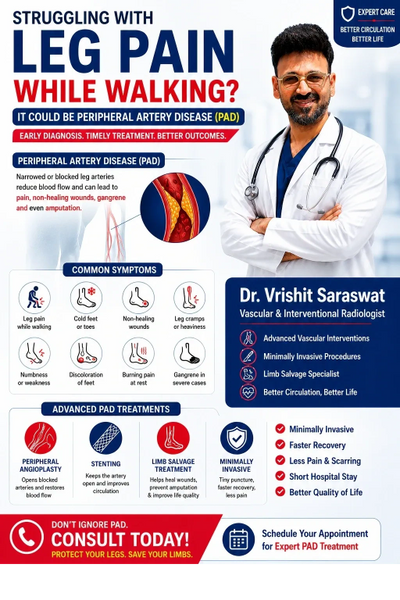
Peripheral Artery Disease (PAD) is a serious vascular condition caused by the narrowing or blockage of arteries that supply blood to the legs. This reduced blood flow can lead to symptoms such as leg pain, difficulty walking, non-healing wounds, gangrene, and an increased risk of limb loss if left untreated. Early diagnosis and advanced PAD treatment through minimally invasive procedures can restore blood circulation, relieve symptoms, and help prevent serious complications, ensuring effective vascular care.
What Is Peripheral Artery Disease (PAD)?
Peripheral Artery Disease (PAD) occurs when fatty deposits (plaque) build up inside arteries, leading to reduced blood flow to the legs and feet. PAD is often linked to atherosclerosis and can gradually worsen over time if left untreated. Effective PAD treatment is essential to manage symptoms and improve quality of life. Minimally invasive procedures are available for patients experiencing complications from this condition.
PAD affects circulation and can interfere with walking, wound healing, and other daily activities.
Common Symptoms of PAD
Patients with Peripheral Artery Disease may experience:
- Leg pain while walking (claudication)
- Leg cramps during activity
- Cold feet or toes
- Numbness or weakness in legs
- Non-healing foot ulcers
- Discoloration of feet or toes
- Burning pain at rest
- Gangrene in severe cases
- Reduced walking distance
Symptoms often worsen without proper vascular care and treatment.
Know more about Peripheral Artery Disease (PAD)?

Common Symptoms of PAD
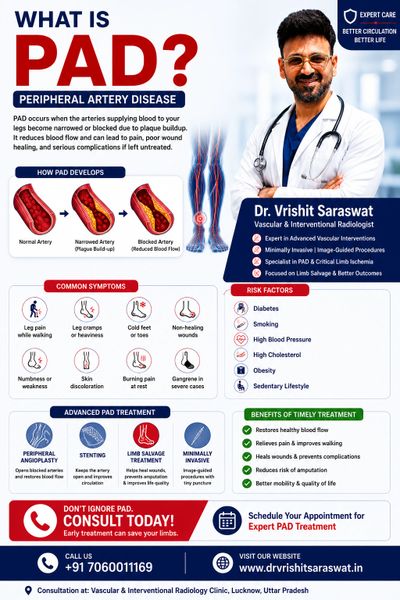
Patients with Peripheral Artery Disease (PAD) may experience a range of symptoms that can significantly impact their quality of life. Common symptoms include leg pain while walking (claudication), leg cramps during activity, and cold feet or toes. Additionally, individuals may notice numbness or weakness in their legs, non-healing foot ulcers, discoloration of feet or toes, and burning pain at rest. In severe cases, gangrene may develop, leading to a reduced walking distance. Seeking effective PAD treatment, including minimally invasive procedures, is crucial, as symptoms often worsen without appropriate vascular care.
Causes & Risk Factors
Several conditions increase the risk of PAD, including diabetes, smoking, high blood pressure, high cholesterol, obesity, kidney disease, increasing age, and a sedentary lifestyle. Patients with diabetes and a history of smoking are at significantly higher risk, making them prime candidates for PAD treatment options, including minimally invasive procedures that can enhance vascular care.
Why Early PAD Treatment Is Important
Untreated PAD can lead to serious complications, including Critical Limb Ischemia (CLI), non-healing ulcers, severe infection, gangrene, amputation, and increased cardiovascular risk. However, early vascular intervention through minimally invasive procedures can help restore circulation and significantly reduce these complications, making it an essential aspect of effective PAD treatment and comprehensive vascular care.
Advanced PAD Treatment Options
Peripheral Angioplasty
Peripheral angioplasty is a type of minimally invasive procedure designed to open blocked arteries in the legs, making it a crucial option for effective PAD treatment.
During the procedure:
- A tiny catheter is inserted through a small puncture
- Balloons are used to widen narrowed arteries
- Blood flow is restored to affected areas
Benefits of Angioplasty:
- Minimally invasive treatment
- No major surgery
- Faster recovery
- Improved walking ability
- Better wound healing
- Reduced pain
Peripheral Stenting
In some cases, stents may be placed inside arteries to keep them open and maintain blood flow, enhancing vascular care. Stenting improves circulation and helps prevent re-narrowing of arteries.
Limb Salvage Procedures
Advanced vascular interventions, such as limb salvage procedures, help preserve the affected limb and reduce the need for amputation in severe PAD cases. Limb salvage treatment focuses on:
- Restoring blood supply
- Healing wounds
- Improving circulation
- Preventing tissue loss
Image-Guided Minimally Invasive Vascular Treatment
Modern interventional radiology procedures utilize advanced imaging technology for precise treatment of blocked arteries without large surgical cuts. Advantages of these minimally invasive procedures include:
- Minimal pain
- Tiny punctures
- Short hospital stay
- Faster recovery
- Reduced surgical risk