Uterine Fibroid Embolization (UFE) Treatment in Lucknow
Advanced Non-Surgical Fibroid Treatment By Dr. Vrishit Saraswat
Uterine fibroids are non-cancerous growths that develop in the uterus and commonly affect women during their reproductive years. While many uterine fibroids remain asymptomatic, larger or multiple fibroids can lead to heavy menstrual bleeding, pelvic pain, pressure symptoms, infertility issues, and a reduced quality of life. Fortunately, a minimally invasive procedure known as Uterine Fibroid Embolization (UFE) offers a non-surgical fibroid treatment that effectively addresses fibroids without the need for major surgery or removal of the uterus.

What Are Uterine Fibroids?
Welcome to Dr. Vrishit Saraswat Radiology Practice
Uterine fibroids are benign muscular tumors that develop within or around the uterus. These common fibroids can vary in size and number, potentially leading to significant symptoms depending on their location. Many women explore non-surgical fibroid treatment options, including minimally invasive procedures, to manage their symptoms effectively.

Know more about Uterine Fibroid Embolization (UFE)
Common Symptoms of Fibroids
Women with uterine fibroids may experience symptoms such as heavy menstrual bleeding, prolonged periods, pelvic pain or pressure, lower abdominal swelling, frequent urination, constipation, pain during intercourse, fatigue due to anemia, and in some cases, difficulty conceiving. If these fibroids interfere with daily life, seeking a medical evaluation for options like a minimally invasive procedure or non-surgical fibroid treatment is recommended.
What Is Uterine Fibroid Embolization (UFE)?
Uterine Fibroid Embolization, also known as Uterine Artery Embolization, is a minimally invasive procedure performed by an interventional radiologist to effectively shrink uterine fibroids by blocking their blood supply.
During this non-surgical fibroid treatment:
- A tiny catheter is inserted through a small puncture in the wrist or groin.
- Under imaging guidance, the blood vessels supplying the fibroids are identified.
- Special embolic particles are injected to block blood flow.
- Over time, the fibroids gradually shrink.
This approach preserves the uterus, eliminating the need for major surgical cuts.
Benefits of Uterine Fibroid Embolization
Non-Surgical Treatment
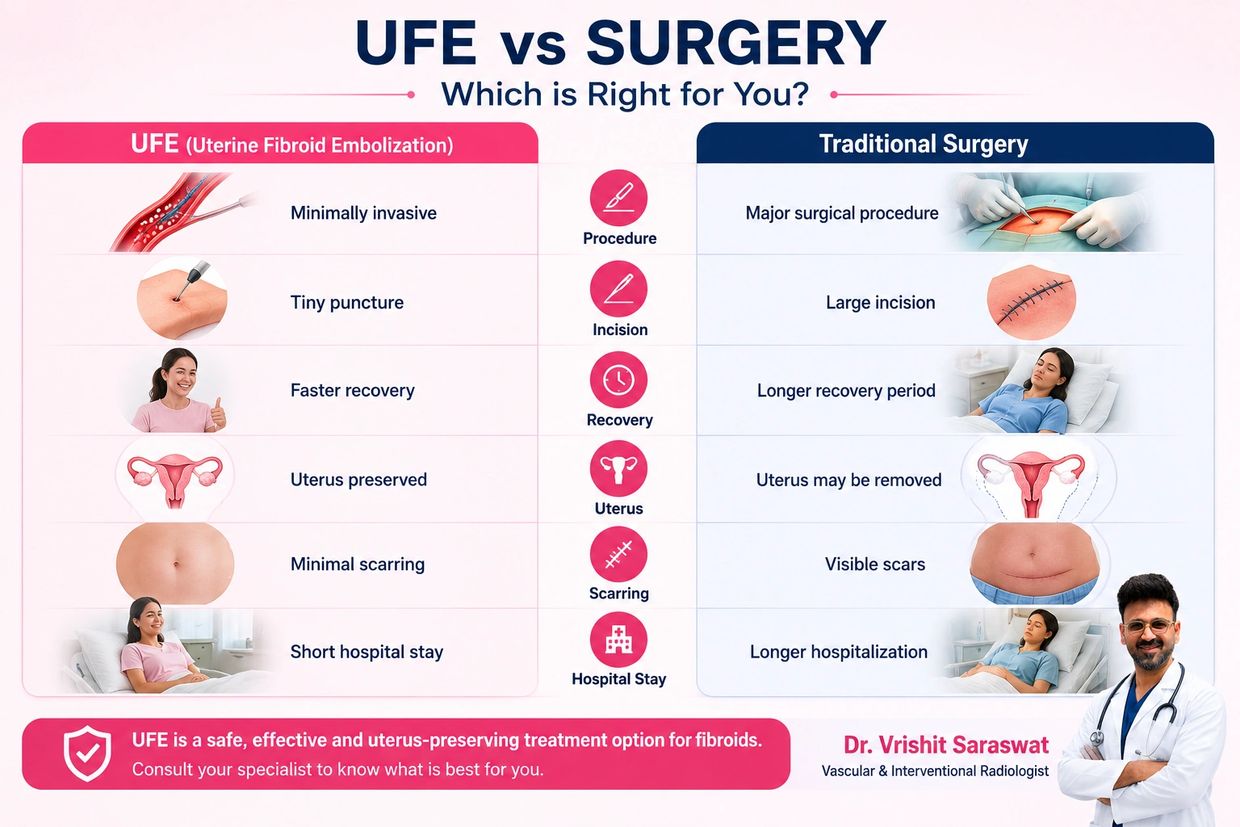
UFE is a minimally invasive procedure that avoids major surgery and does not require the removal of the uterus.
Uterus Preservation
This non-surgical fibroid treatment allows women to preserve their uterus while effectively addressing symptomatic fibroids.
Faster Recovery
Patients typically experience a significantly faster recovery compared to traditional surgery.
Minimal Scarring
Only a tiny puncture is needed instead of large incisions, leading to minimal scarring.
Reduced Hospital Stay
Most patients can return home shortly after the treatment.
Effective Symptom Relief
UFE provides effective symptom relief by helping to reduce:
- Heavy bleeding
- Pelvic pressure
- Pain and discomfort
- Fibroid size
Recovery After UFE
Most women experience gradual symptom improvement over weeks to months as uterine fibroids shrink following a minimally invasive procedure. Recovery benefits from this non-surgical fibroid treatment include: Early mobilization, shorter downtime, faster return to work, and reduced post-procedure discomfort. Patients are usually advised to follow post-procedure instructions carefully for optimal recovery.
Why Choose Dr. Vrishit Saraswat?
Dr. Vrishit Saraswat specializes in advanced minimally invasive vascular and interventional radiology procedures using modern image-guided techniques.
Patients choose Dr. Vrishit Saraswat for:
- Expertise in embolization procedures
- Advanced minimally invasive treatment
- Personalized patient care
- Modern image-guided techniques
- Focus on safety and faster recovery
- Uterus-preserving treatment options